
This website was established while I was a Member of the Scottish Parliament. I was a Member from May 2007 to 8 April 2026.
News - Naidheachdan

SNP MSP for Na h-Eileanan an Iar, Alasdair Allan, has welcomed the passing the Crofting and Scottish Land Court Bill, following its final vote in in the Scottish Parliament late this afternoon. This is one of the final pieces of legislation to be voted through in the current parliamentary session.
The Bill is designed to simplify legislation to make crofting regulation less onerous, as well as strengthen the role of grazing committees sharing common land and give crofters a greater say in how the land they work on is used.
Commenting, Alasdair Allan said:
“140 years of successive crofting acts have created a complex legal framework that is not currently serving crofting particularly efficiently. So, this bill is a welcome move to simplify some of that picture. I very much hope to see further and more comprehensive legislation soon.
“I would like to thank all the crofters who engaged with the policy making process, from responding to consultations to those who were able to meet directly with the Minister for Agriculture when he was in the Western Isles last year. I would like to pay thanks in particular to the Scottish Crofting Federation for their efforts in highlighting areas requiring amendments to strengthen the bill, as introduced, and for their direct engagement with me on this.
“I was pleased to have been able to secure a significant number of my own amendments to this bill at Stage 2. These make improvements, such as giving Ministers the power to regulate the transfer of owner-occupier crofts; preventing a right-to-buy where a crofter is in breach of their duties; the explicit inclusion of ‘enforcement of duties’ in the Crofting Commission’s responsibilities; and introducing a more practical and proportional civil rather than criminal penalty when there is a failure to uphold certain duties.
“Last week, I was then able to bring forward additional amendments at Stage 3, which relate to grazings shares, and giving the Crofting Commission rather than landowners, the final say, on applications for environmental or forestry use of common grazings.
“It felt very fitting that my final speech in this session of Parliament was about a subject as important to my constituency as crofting. I’m very glad we have managed to get this important legislation over the line before Parliament’s dissolution ahead of the election campaign.”

I have had hundreds of emails from constituents about the assisted Dying Bill and many people will already know I voted against the Bill at stage 1. Now people, understandably want to know how I will vote at stage 3.
Now the Bill comes to its final stage in Parliament, I have continued to try to give this bill the serious thought it deserves. Like many other MSPs, the issues that this bill has raised for me are troubling, and I have tried to do them justice.
The way Mr McArthur and many other members have debated this bill has been a credit to this Parliament.
For both sides of this debate, huge questions of principle are clearly engaged. The debate has for many people also awakened memories of their own families’ own most harrowing experiences.
During the course of the bill, I tried to support amendments which I thought might introduce safeguards. But I also tried to avoid making changes that I reckoned would make the bill garbled or land it in court.
Yet, still, I am left looking at a bill now that genuinely troubles me.
One of the reasons for that is the significant holes in it.
I realise there were compelling legal reasons why Parliament had to remove the provisions guaranteeing health professionals the right not to participate in assisted dying. Those original measures, wise as they were, exceeded the Scottish Parliament’s devolved powers. The best hope now is that those gaps will somehow be filled in by Westminster at some future date.
That prospect may reassure some people. But it does not reassure the Royal College of Psychiatrists in Scotland, who have cited this new uncertainty as their reason for moving from a position of neutrality on the bill to one of opposition.
Many opportunities were passed up to support amendments that might have plugged other gaps. The bill’s movers could, I believe, have reached out, to religious and other charitable institutions by accepting an institutional right to opt out. They did not, and that now, potentially, has consequences.
Meanwhile, I was not the only MSP to be genuinely taken aback when the majority in Parliament rejected Daniel Johnson MSP’s amendments. These would have prohibited situations arising where the option of assisted dying was raised proactively by doctors, rather than initiated by the patient.
As a result, we now have a bill that feels, to me, to assume that a conversation between someone with a terminal diagnosis and a doctor is always going to be a constructive experience, in which a range of options will be understood, assessed and placidly discussed. All I can say is I can’t really imagine that this is how such a conversation would go for me.
And, for older patients from many backgrounds, it is difficult to overstate the extent to which a doctor is still an authority figure. Some people have told me they simply lack the personal confidence to contradict a doctor. Ever.
I recognise that some people will disagree with me. I can at least agree with them that this bill is founded in the vitally important principle of personal autonomy.
However,, for me, it exhibits a very idealised vision of that autonomy. It pictures a world in which people exercise choices without any external forces ever being placed upon them; Like the pressures on a woman in a controlling relationship; or those on someone who nurses the never-uttered fear that living out their years in a care home might cost their children the inheritance of a house.
The bill also seems, to me, to assume that people seek out the help and support they need in their lives, in order to allow them to be assertive about their own rights and needs. In rural and other traditional communities, where the desire to save face and avoid being talked about can be powerful forces, such an assumption is often ill-founded.
I completely accept that families, doctors, nurses, already have to wrestle with deeply distressing end of life decisions. The manner of some deaths already raises questions about human suffering to which I certainly offer no trite answers.
Yet I still have to recall the advice, often given to legislators, that “hard cases make bad law”. That, advice is, I believe, not to belittle the hardness – the terrible, tragic hardness - of the situations we are talking about.
Rather, I believe that this maxim is a warning that laws generally prove to have much wider applications than those which politicians originally had in mind.
The fact is that we now have a bill which is opposed by the Royal Pharmaceutical Society in Scotland, opposed by numerous former presidents of the Royal Societies of Physicians and Surgeons in both Glasgow and Edinburgh, opposed by the Royal College of Psychiatrists in Scotland and opposed by Inclusion Scotland.
The Scottish Council on Human Bioethics, meanwhile, has said the bill “infringes the UN Convention on the Rights of Persons with Disabilities”.
Anyone who feels they can see past objections like those, needs to feel very sure about this bill.
I am not. I respect those who have come to a different conclusion, but, I will be voting against it.

SNP MSP for Na h-Eileanan an Iar, Alasdair Allan has joined SNP colleagues in a joint letter to the UK Chancellor over the soaring costs of heating oil for off-gas grid households.
Households in the Western Isles are highly dependent on heating oil heating oil with 46% of island homes using oil as their primary source of energy for heating and cooking.
The price of heating oil has almost doubled since January owing to the US-Israeli military action against Iran, prompting instability across global supply chains in the Middle East.
With energy price regulation reserved to the UK Labour Government, the joint letter demands financial support from the UK Government for heating oil users while the issue is referred to the Competition and Markets Authority.
Allan commented:
“I have repeatedly advocated for the introduction on a price cap on heating oil. Previous responses from UK Governments have always claimed there was ‘sufficient competition’ to keep prices ‘competitive’ for consumers.
“This is simply no longer a credible response from Westminster. Despite Labour’s promise to cut energy bills, 46% of island household are now facing the prospect of their bills doubling due not heeding my previous warnings for a price cap.
“I am hopeful the Chancellor will take our letter for action seriously. However, I believe this is yet more evidence why Scotland needs to have control over our own energy policy as an independent country.”

More than 70,000 instances of support were provided to families to clear historic school meal debt as a result of nearly £2.9 million investment, a new report shows.
The School Meal Debt Fund, launched in May 2024, was distributed to the 30 councils that applied for assistance to clear debt accrued by families up to 31 March 2024. More than £10,000 was allocated to Comhairle nan Eilean Siar.
The fund was established in response to cost-of-living pressures and the stigma that school meal debt can place on children.
The School Meal Debt Fund Report, published today, also sets out councils' strategies for addressing meal debt, such as flexible payment options, simplified free school meal applications and extended free meal provision.
Education Secretary Jenny Gilruth said:
"No child should feel the burden of school meal debt, and no family should face unnecessary stress over the cost of their child's lunch.
"This report highlights the compassionate and innovative approaches being taken by councils to support families - from streamlining free school meal applications to offering flexible payment options and working directly with families facing hardship.
"School meal debt is still an issue. While councils are proactively identifying and supporting those who need help the most, they must ensure that all families never reach the point of debt in the first place. We will continue to work with councils to ensure that more can be done to address this.
"Over 230,000 pupils are currently benefitting from free school meals, a crucial element in our commitment to eradicate child poverty. This saves families who take up the offer every school day around £450 per child, per year. Our 2026-27 Budget expands free school meal provision to reach an additional 5,500 pupils, continuing our mission to give every child the best possible start in life."
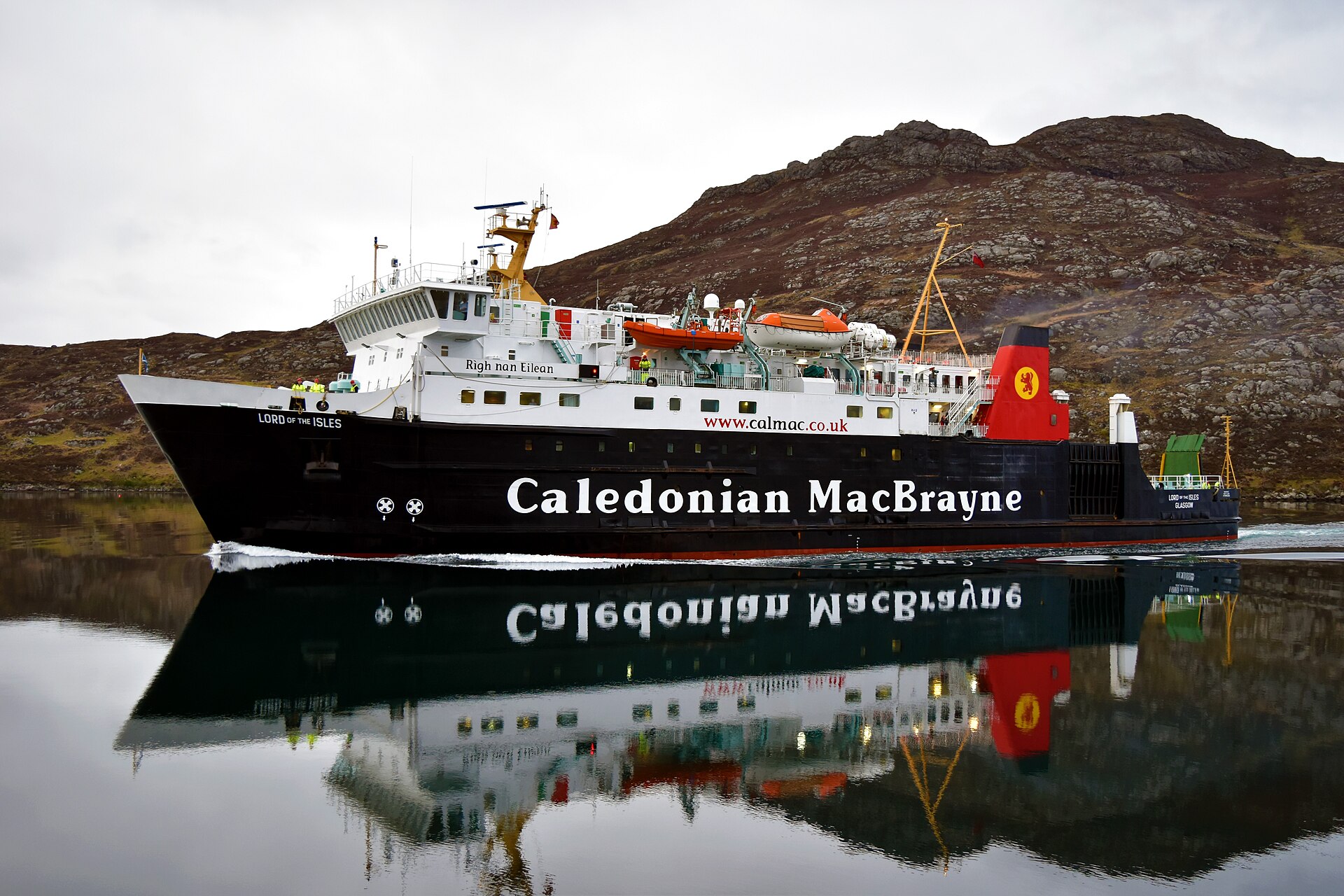
SNP MSP for Na h-Eileanan an Iar, Alasdair Allan, has welcomed today’s announcement from the Scottish Government on further renewal of the CalMac fleet, including a new vessel being tendered to replace MV Lord of the Isles.
The Cabinet Secretary announced that a direct award would not be given to any shipyard for the replacement vessel. Instead, the contract would go out to tender to ensure a replacement vessel will be delivered quickly and affordably.
New vessels were also confirmed for the Sounds of Barra and Harris, with the islands’ MSP seeking further details.
Alasdair Allan commented:
“Today’s announcement from the Cabinet Secretary is good news for people in Uist in particular. The Cabinet Secretary today committed to an open procurement process for a replacement for the Lord of the Isles worth £55 million.
“There’s also a very welcome £40 million commitment for a new ferry terminal at Gasaigh in Lochboisdale, totalling almost £100 million spent on improving connectivity links for in South Uist.
“Additionally, the confirmation of the next steps in Phase 2 of the Small Vessel Replacement Programme (SVRP2) is welcome, with communities now awaiting further information on the contract award for the Sound of Harris and Sound Barra route vessels, and Ministers proposing a direct award.
“Today’s major announcements are proof that the SNP Government is continuing to put the needs of islanders and island communities at the heart of its decision-making progress.”
Twitter latest
Survey
Your voice is important to us
- tell us what you think.

Newsletter

Contact Me
Alasdair Allan MSP
Constituency Office
20 Kenneth Street, Stornoway HS1 2DR
Tel: Lewis & Harris 01851 700357
Uist & Barra 01870 602287
E-mail: alasdair.allan.msp@parliament.scot